Put a $600 flat-bar hybrid and a $1,400 one side by side in a shop and the visible differences are small: both have aluminum frames, both have disc brakes, both have a wide gear range and a rack-compatible rear triangle. The gap is real, but it is distributed unevenly, and a good deal of it lands in places a commuter will never notice. Working out which parts of that gap you will feel on a Tuesday morning, and which parts exist to fill out a spec sheet, is the whole exercise.
Wheels are where the first real money goes
On a cheap hybrid the wheels are usually unbranded, machine-built, with straight-gauge spokes and eyeleted rims that arrive at uneven tension. They work. They also go out of true after a few curb hits and need a shop visit within the first season. Move up a few hundred dollars and you typically get a hand-checked or better-tensioned build, butted spokes, and sealed cartridge bearings in the hubs instead of loose ball bearings in cup-and-cone races. The weight saving is modest, maybe a pound across the pair. The durability difference is not modest at all, and it is the single upgrade a daily rider notices most, mainly by not thinking about it.
Frame material changes less than the price suggests
Almost every flat-bar bike between $500 and $1,500 has an aluminum frame, and the differences between them are in tube shaping, welding and the fork. A budget bike often carries an aluminum or steel fork with a straight steerer; higher up you get a carbon fork with a tapered steerer, which takes some of the buzz out of chip-sealed pavement and cuts most of a pound. That is a genuine improvement on a two-mile stretch of rough shoulder. Internal cable routing and hidden rack mounts, by contrast, are cosmetic. A careful reader checks the fork specification, the rear axle standard, and whether the frame has three-point rack mounting, then stops caring about the tubing name.
Drivetrain tiers: shift quality, not gear count
Groupset hierarchies tempt people into paying for the wrong thing. Going from an entry-level eight-speed to a nine- or ten-speed setup rarely gives you a wider range; the low gear on a cheap triple can be lower than the low gear on an expensive single-ring drivetrain. What improves is shift precision under load, the crispness of the rear derailleur's return spring, and how long the shifting stays crisp as cables stretch and the cassette wears. Clutch-equipped rear derailleurs, which arrive around the middle of this price band, hold the chain steady on washboard gravel. That one is felt. A named crankset is mostly not.
Brakes are the clearest dividing line
Mechanical disc brakes on a $550 bike, with a resin-pad caliper pulled by a steel cable, stop the bike, and the Consumer Product Safety Commission is the federal body responsible for the safety requirements bicycles sold in the United States have to meet. What mechanical discs do not do is stay consistent. Pads wear, one side of a single-piston caliper drifts, the cable picks up grit, and lever throw grows over a wet winter. Hydraulic discs self-adjust for pad wear, need one finger instead of three, and modulate far better on a loaded bike descending in rain. If you can only move the budget in one direction, move it here.
What to check before you hand over the card
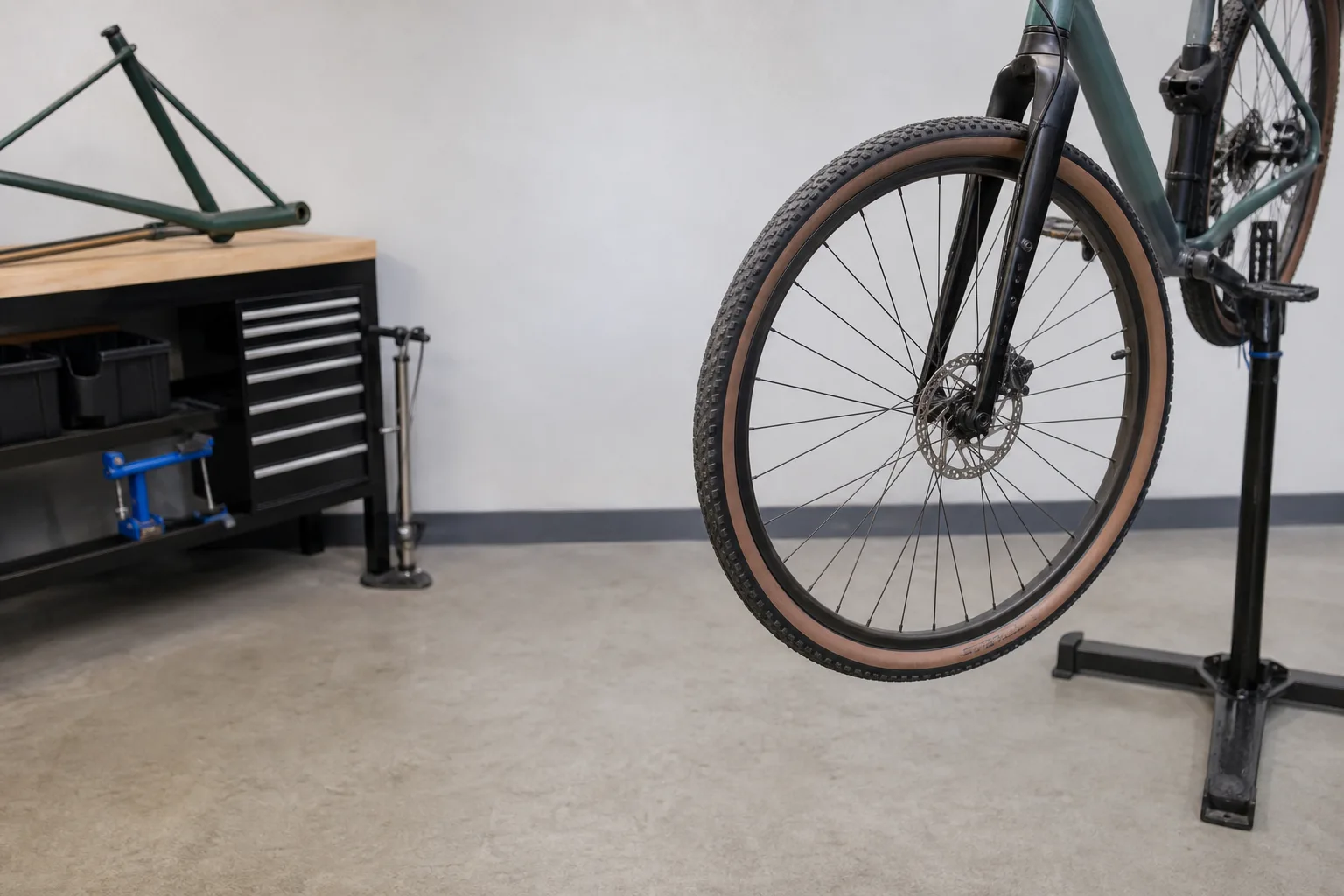
Ask which parts on the bike are the manufacturer's own house brand, because that is where a builder finds margin: the crankset, the wheels, the seatpost, the cockpit. Look at the tires next, since a bike with 700x38c tires with a puncture belt and a real tread casing is worth more to a commuter than a bike two tiers up on a spare-looking 32c. Check that the rear hub takes a thru-axle if you want wheel options later. Check the seatpost diameter for a suspension post. Then price the difference against a set of better tires and a shop tune-up.
The honest version of the answer is that a rider on a mixed route of pavement, path and packed gravel feels brakes first, wheels second, tires immediately, and drivetrain tier last. Money spent in that order buys more real improvement than money spent evenly across the bike, and it holds its value through the second winter, which is when cheap components generally announce themselves.